
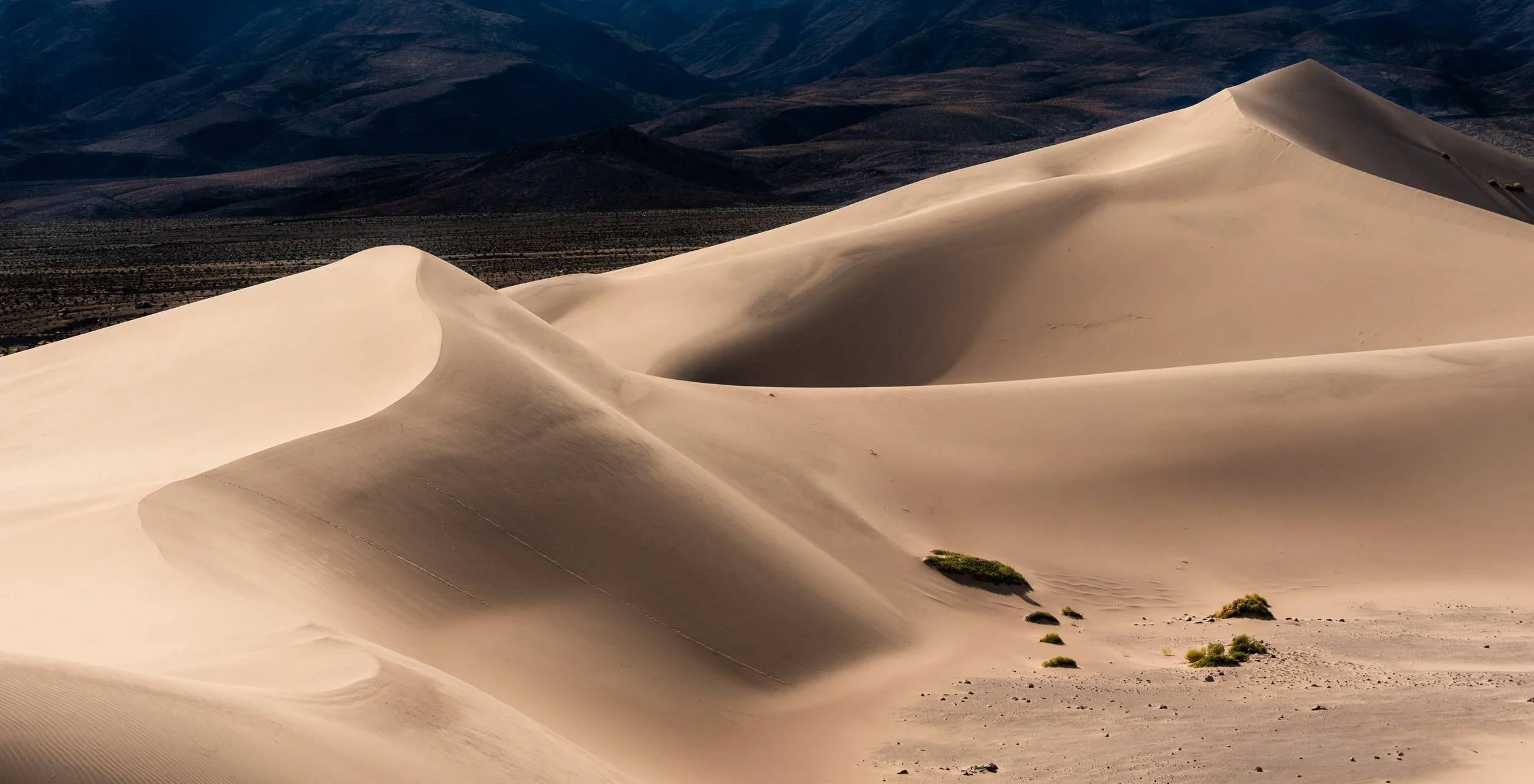
Uncharted Sand Dunes
A remote dune field, 45‑degree heat and a race against nightfall in Death Valley. This is the story behind finding – and escaping – one of the quietest places I’ve ever photographed.
Into the Hidden Dunes of Death Valley
November 2023, Death Valley National Park.
Spoilt with a quality of light at sunrise I rarely see, my mind starts whirring on what sunset might bring and where I’ll be to capture it.
The sand dunes are calling. But I want to venture further. Beyond those that lie within easy reach. Beyond the footprints of travellers that went before. I want to capture lands unseen… but where?
The Place
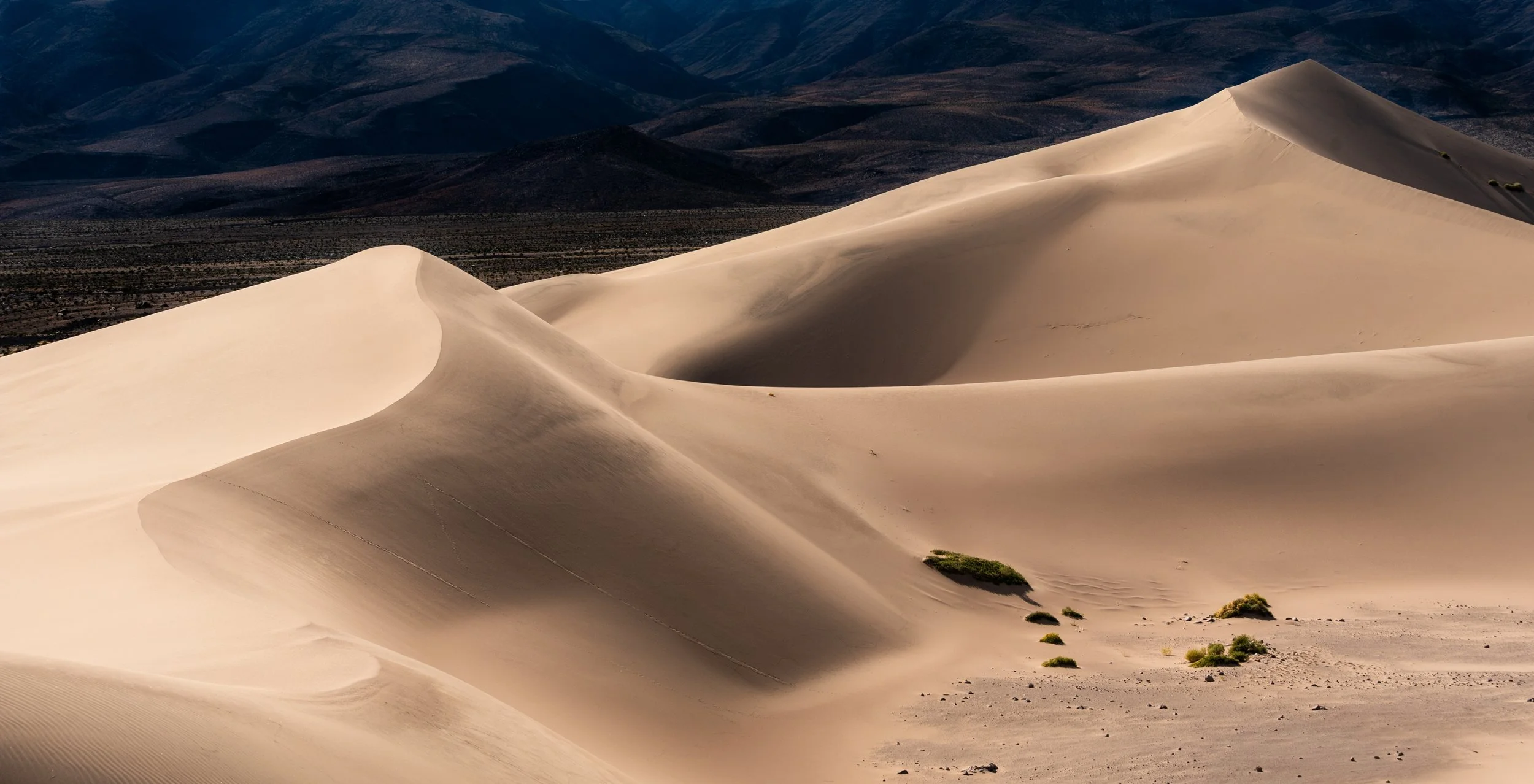
Death Valley has a particular way with light – harsh and unforgiving in the middle of the day, but capable of producing colours and atmosphere at sunrise and sunset that feel almost unreal.
I knew I didn’t want the “standard” dunes within easy access of the road. I wanted a more remote field: no footprints, no obvious paths, somewhere that felt genuinely wild.
The Plan
Scanning Google Maps within what I thought was a one‑hour radius, I stumbled upon a patch of gold with swirls only wind and time can form. Bingo.
The location seemed perfect: not too far from the main road running south, an open expanse surrounded by jagged mountains that could give me a moody background if the light played ball. There appeared to be a track peeling off the main road, leading towards a point I estimated to be about four miles from the dune field’s edge.
On paper, the plan was simple:
Roughly a one‑hour drive south on the main road.
About a mile along the track.
A four‑mile walk across open ground into the dunes.
Pretty straightforward…
Planning is everything in landscape photography – location first, then timing. Timing is crucial. I’ve found myself on countless occasions getting this wrong, scrambling as the light comes and goes while I’m still deciding on a composition. Over the years, I’ve learnt to prioritise enjoying the location, and that means giving myself enough time simply to be there.
So I worked backwards from my ideal shoot time (sunset), added a generous buffer, and factored in the drive and time to explore once I arrived.
This particular shoot was different, though. I decided a full afternoon in the dunes before sunset would be spectacular – watching shifting shadows as the sun moved across the sky. That meant a few hours in an open field, no shade, 45‑degree heat and no civilisation within any reasonable distance.
The kit list reflected that:
Water – and plenty of it.
Wide‑brimmed hat.
High‑energy snacks.
Head torch.
Goggles and a full body‑covering change of clothing in case the wind picked up and soft sand turned into shards of fine glass ripping through the air.
Lesson learned from previous ventures.
Phone reception is non‑existent in these lands, so downloading offline maps beforehand pays dividends – especially in dunes with a setting sun.
Camera gear cleaned, batteries charged, everything stored safely, I set off into the wilderness, excited to see what I’d find.
Into the Dunes
The road south was straightforward, and the first hour went exactly as expected. I found the turning for the track and pulled in, expecting some manageable gravel a rental car could handle.
Instead, I faced a track scattered with boulders, potholes larger than any pot I’ve ever seen, and a surface caked in sand. I’m an experienced off‑road driver, but even this was going to be a challenge.
What should have been a short five‑mile burst up a track road became an hour‑long ordeal, navigating countless obstacles and quietly worrying how I’d handle this in the dark on the way back.
Through the heat haze I began to see them: the peaks of sand dunes so large I could not fathom their true scale. They were still some distance away, but they were there. Going back wasn’t really an option now. I was in too deep. Excitement and curiosity took over, and I pushed on along the ever‑worsening track.
I’d pinned a spot on my offline map that seemed the closest to the foot of the dunes “as the crow flies”. Reaching that point, I pulled over and stepped out into the burning early‑afternoon heat of Death Valley.
Between me and the dunes lay open scrubland – desert fauna to slalom through and a deceptive incline. The dunes looked close enough to touch, but the haze played tricks with distance. As I walked, the sense of isolation settled in. I knew I was somewhere special – but also somewhere unforgiving.
Carcasses of animals lay bare around me, victims of this brutal environment. Then I began to notice something else: holes. Lots of holes. Dotted across the landscape, clustered at the openings of small mounds. It dawned on me that I was not alone. Snakes were here, and in numbers.
I know very little about them, having mostly avoided them my whole life, but I figured that come nightfall they might make an appearance. Sweat trickled down my spine, and this time it wasn’t the temperature. What had I walked myself into?
I pushed on, but my pace quickened. I wanted to spend as little time in that scrubland as possible.
The feeling when I finally reached the foot of the dunes and felt the sand thicken beneath my boots is hard to describe. First, relief. Then, total overwhelm at what lay ahead: dunes the height of skyscrapers, unfamiliar formations, and not a single footprint in sight.
A clean canvas to paint on, and an entire afternoon to test my dune‑climbing abilities – any fears of the return leg pushed to one side. I felt like a child with Disney World all to themselves.
Chasing Light Among Giants
Photographing in dunes is challenging. Planning takes on a new meaning: the last thing you want is to find a perfect composition only to realise your own footprints are scattered through it.
The key is to stay aware in all directions, not just straight ahead. Finding the highest vantage points allows you to survey the entire scene, but shifting shadows create fleeting compositions and you have to be vigilant to catch them before they disappear.
Then there’s the physical side: riding waves of ridgelines in burning heat. I’ve learnt to make full use of the shadows large dunes cast, ducking into them briefly for water and a moment to recharge.
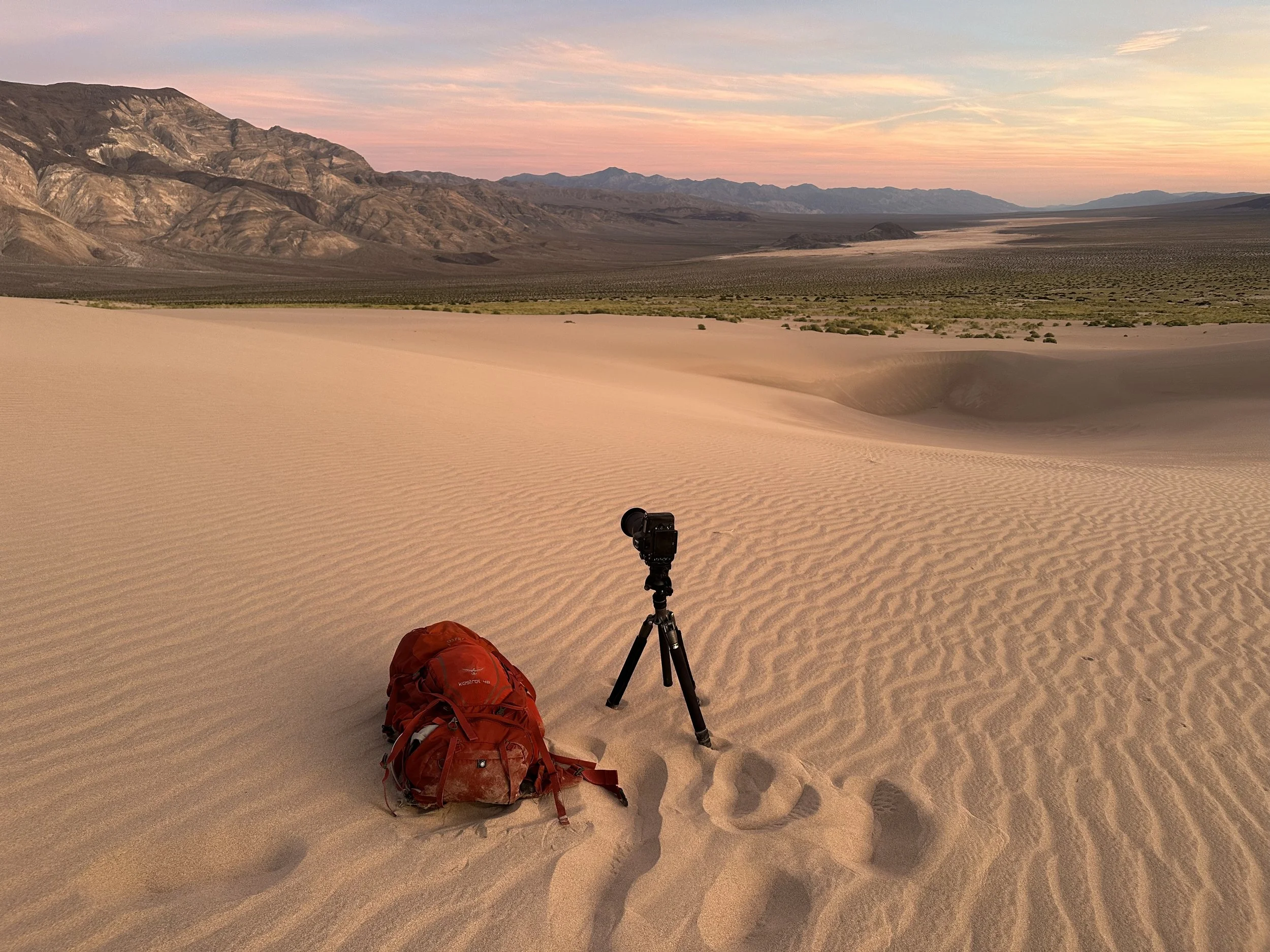
Gear takes a beating in these conditions. Strong winds whip sand into every gap. I always carry a lens blower and only change lenses if there’s a clear break in the wind – ideally you’d have a camera body with a sensor shield. Sand works its way into tripod legs and ballhead mechanisms, and that’s if you can get the tripod to stand still on shifting ground.
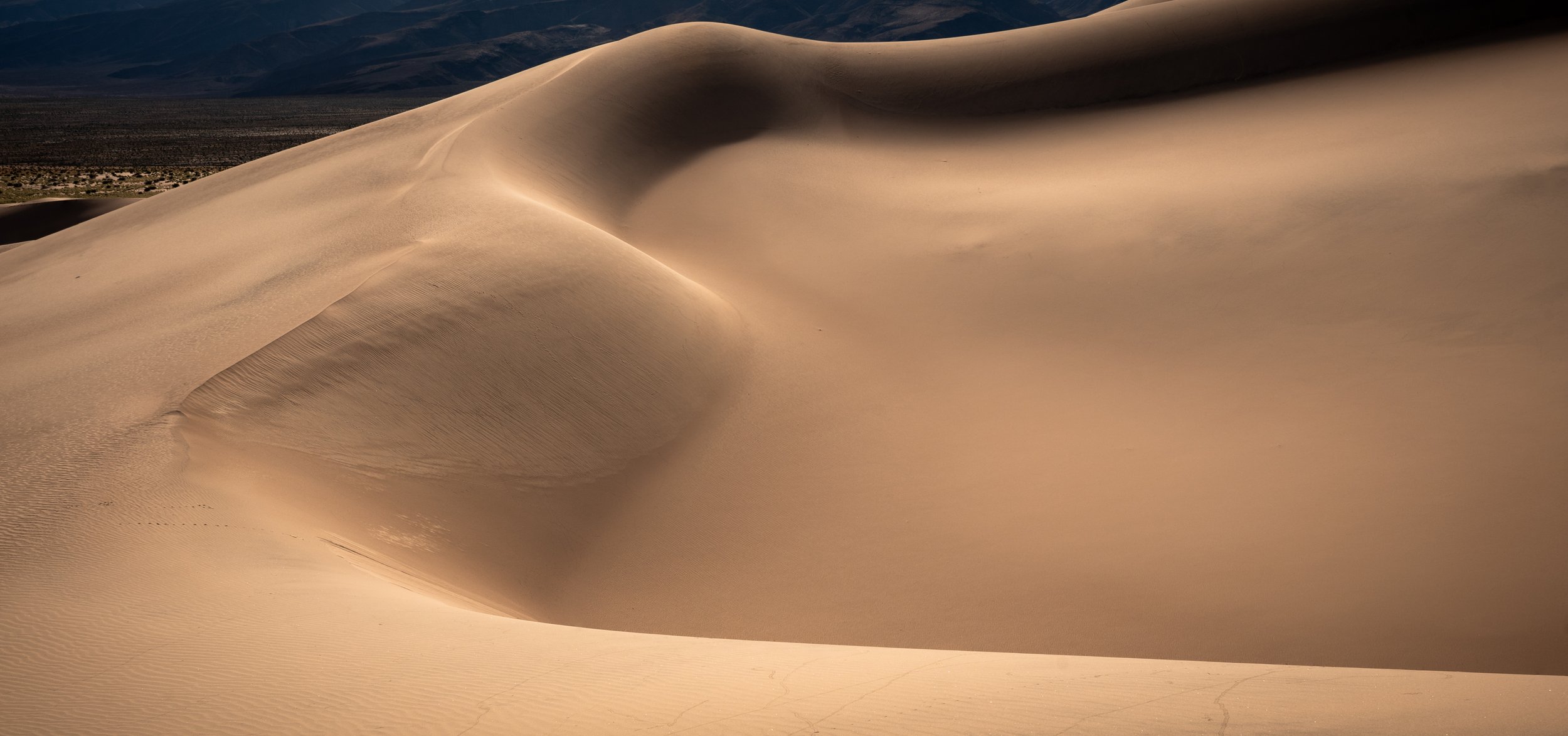
The rewards for navigating all of this are spectacular. The power of nature and the ability of wind to sculpt the land create a beautiful contrast between scale and simplicity – a sense of movement in utter stillness.
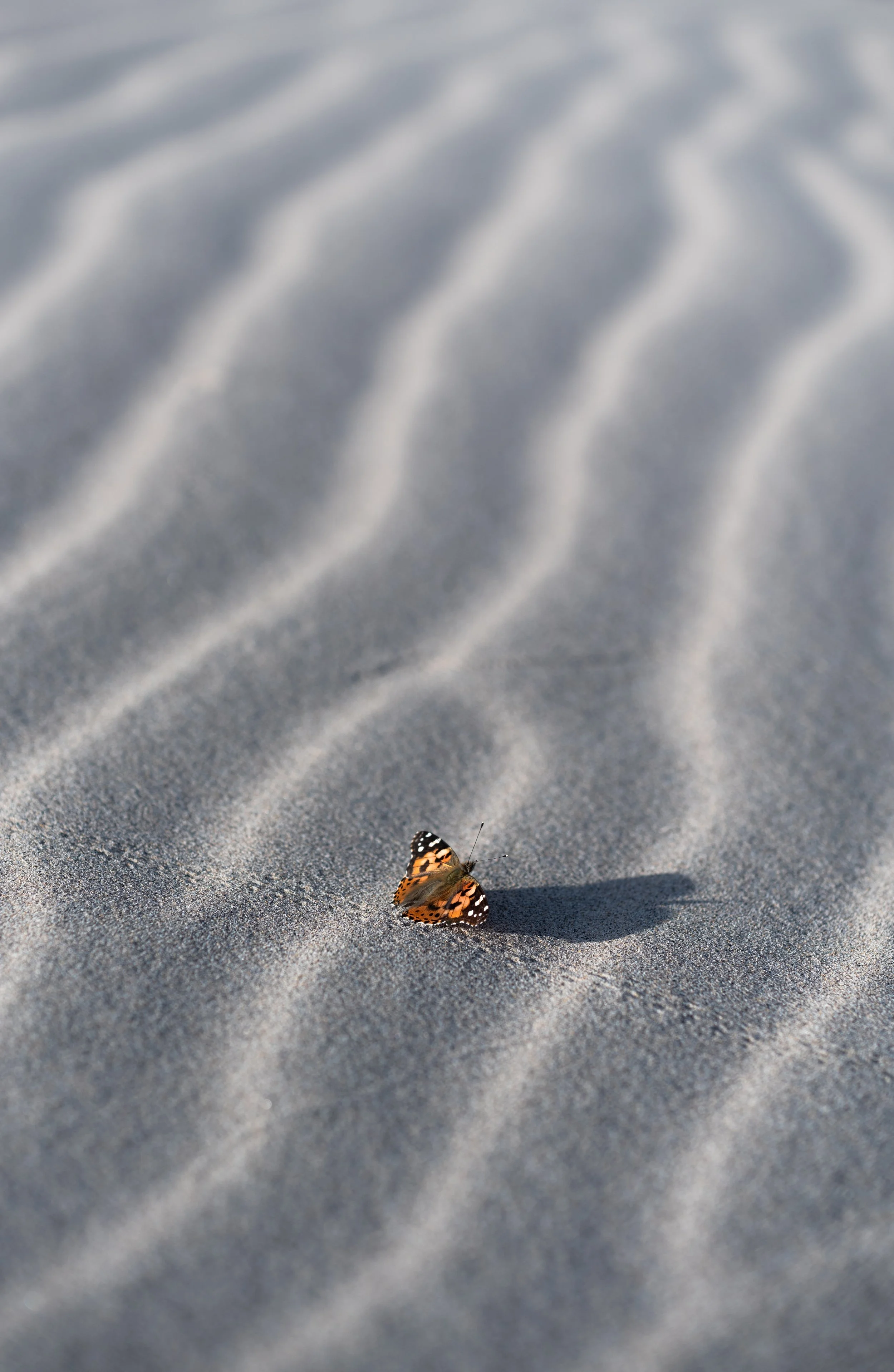
At one point a lone butterfly landed beside me, leaving tiny footprints in the sand. It was a startling detail of fragility in such a hostile place. How can life exist in conditions like this?
The Shot
As the afternoon wore on, I moved through the dunes, watching shadow lines sharpen and soften, looking for clean curves and the interplay between light and dark that would reduce this vast landscape into simple, graphic forms.
From higher vantage points I could see patterns that were invisible at ground level – cross‑hatching ridgelines, alternating bands of light, and small details like that butterfly that added scale and story.
The final compositions came from a balance of:
Elevation: getting high enough to see the larger patterns.
Restraint: keeping footprints behind me, never across a potential frame.
Timing: catching the moments when shadows elongated and the dunes’ shapes became most pronounced.
The Race Against Night
As sunset approached, the air began to cool. High clouds drifted in. Winds dropped to a murmur. I’d gathered what I felt were strong compositions in the late‑afternoon light, and there was a sense of contentment – but also the reminder that I still had to get out.
Fears about the return leg resurfaced. Navigating dunes in darkness is dangerous, and with multiple “legs” already ahead of me (the scrubland, the brutal track, the drive back) I didn’t want to add another by staying deep into blue hour.
I worked my way back towards the open expanse at the edge of the field, positioning myself so I could still enjoy the last light while staying closer to a safe exit.
From there, looking south, I could see for miles. Death Valley seems to produce a palette at sunset that’s entirely its own. In the stillness, you could have heard a pin drop.
Blue hour wasn’t an option. I packed my gear, strapped on my headtorch and ran – cascading down the dunes, back into the open brush. I tried to tread lightly, conscious of what might be beneath my feet.
Then my headtorch failed. I should have invested in a better one.
Using my Garmin watch and my phone torch in one hand, I continued to run in what I hoped was the right direction. Maintaining orientation at speed in darkness is harder than it sounds, and my line back to the car was anything but straight.
I relied on the darker silhouettes of mountains I’d noted earlier as anchor points, using them to keep my bearing roughly in check. It worked well enough: eventually, the shape of the car emerged.
The temperature had dropped sharply. I felt that familiar desert chill as soon as I stopped moving.
I swung the car around and picked my way back along the boulder‑strewn track, full beams on, inching forwards and praying not to hear the tell‑tale thud of a puncture. This was not the place or time for a flat.
Finally, the terrain eased. The sight of solid tarmac was more welcome than any view that day. I stopped the car, my body relaxed, and I slumped into the seat – exhausted mentally as much as physically, but knowing I’d experienced, and captured, something special.
Lessons from Death Valley
Arrive early: dunes reward hours of wandering before the light peaks.
Over‑prepare for heat and isolation: water, sun protection, offline maps, and a proper headtorch aren’t optional here.
Think in all directions: your footprints, future compositions, and escape route all need to be in your mind at once.
Respect the desert: from snakes to sudden temperature drops, it’s a place that doesn’t forgive complacency.